
School Bus Injuries in Utah: Who May Be Responsible?
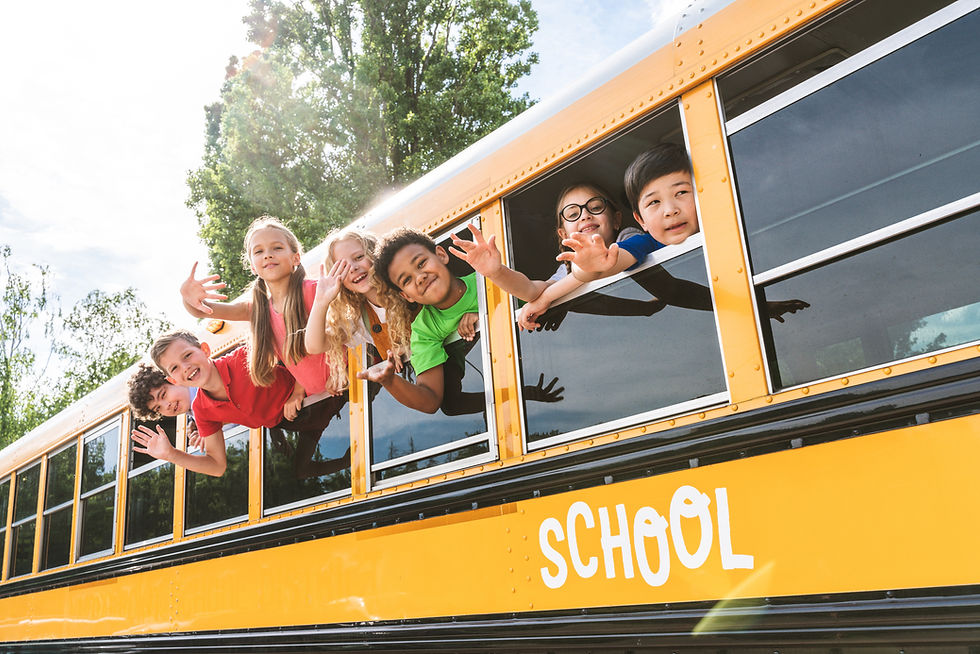
When someone is injured in a Utah school bus incident, responsibility may fall on more than one person or company. A negligent driver may be responsible for passing a stopped bus, a school bus driver may be responsible for unsafe operation, and a school district or transportation contractor may be responsible for training, routing, supervision, maintenance, or safety procedures. In serious cases, a maintenance company, bus manufacturer, component manufacturer, property owner, or public agency may also be part of the claim. The first step is not guessing who is at fault; it is preserving the evidence before video, route data, inspection records, and witness memories disappear.
School bus injury cases are different from ordinary car crash cases because they often involve children, public entities, specialized transportation rules, and institutional defendants. A parent may be dealing with a district risk manager, a private contractor, an insurance adjuster, and medical providers at the same time. The family may also be hearing early reassurances that the bus was safe, the driver did nothing wrong, or the child seemed fine at the scene. Call The Legal Beagle at (801) 915-6152 or contact the firm at https://www.mylegalbeagle.com/contact before giving recorded statements, signing broad authorizations, or accepting money tied to a release.
Why Utah School Bus Injury Claims Are Different
School buses are designed and regulated around child safety, but that does not mean every bus incident is unavoidable. NHTSA describes school buses as highly regulated vehicles with safety features such as flashing red lights, cross-view mirrors, stop-sign arms, and protective seating. Utah also has school bus operation standards, including rules that treat passenger and public safety as the bus operator’s primary responsibility. Those standards matter because they help frame what should have happened before, during, and after the incident.
A school bus case may involve conduct inside the bus, outside the bus, at the stop, on the route, or in surrounding traffic. The injury may occur when a child is crossing, boarding, exiting, standing, sitting, or reacting to a sudden stop. It may also occur because another driver ignores the bus lights, the stop is placed in an unsafe location, or the bus is not properly maintained. A good investigation looks beyond the crash report and asks how the transportation system failed.
Who May Be Responsible for a Utah School Bus Injury?
The responsible parties depend on how the injury happened. If another driver passed a stopped bus or struck a child near a bus stop, that driver may be the primary defendant. If the bus driver braked suddenly, drove distracted, started moving before students were seated, failed to use required signals, or mishandled loading and unloading, the driver and employer may be responsible. If a school district or contractor failed to train, supervise, inspect, route, or respond to known safety concerns, the claim may go beyond the individual driver.
Some cases involve defendants that are not obvious at first. A maintenance company may have missed brake, door, tire, light, mirror, or steering problems. A manufacturer may be implicated if a bus component failed or if the design contributed to the injury. A property owner or public entity may be responsible if an unsafe loading area, blocked sight line, ice accumulation, or dangerous stop location contributed to the event. The practical point is simple: school bus cases should be investigated before anyone accepts a narrow version of responsibility.
Drivers Who Ignore School Bus Lights
Utah law places specific duties on motorists approaching a school bus with flashing lights. A driver approaching a bus with flashing amber lights must slow and proceed with due care. A driver facing flashing red lights generally must stop before reaching the school bus and remain stopped until the red lights stop flashing, subject to statutory exceptions for certain roadway layouts. When a driver violates those rules and a child, parent, pedestrian, passenger, or other motorist is hurt, the violation can become central evidence of negligence.
Insurance companies may still try to dispute responsibility even when the facts appear obvious. They may argue that the road had multiple lanes, the bus was not fully stopped, the lights were not visible, the child crossed unexpectedly, or another vehicle blocked the driver’s view. Those arguments should be tested against bus video, dash cameras, stop-arm footage, witness statements, road geometry, lighting, weather, and the timing of the bus signals. A passing-driver case should not be reduced to the driver’s excuse.
The School Bus Driver and Transportation Provider
The bus driver’s conduct matters because the driver controls a vehicle full of children in a setting where predictable child behavior must be expected. A driver may be responsible for unsafe speed, distraction, abrupt maneuvers, improper loading or unloading, failure to account for a child’s location, failure to use mirrors, failure to activate warnings, or failure to maintain order when student behavior creates danger. The investigation should compare the driver’s conduct to training, district policy, state standards, route instructions, and what the video shows. A transportation provider cannot avoid responsibility simply by saying that school buses are generally safe.
The transportation provider may be a public school district, a charter school arrangement, a private school, or a private bus contractor. That distinction matters because different entities may own the bus, employ the driver, maintain the vehicle, design the route, select the stop, and control the records. A parent may not know which entity is responsible until contracts, route documents, policies, and inspection records are reviewed. Early identification matters because the wrong defendant, wrong notice recipient, or wrong insurance contact can waste critical time.
Public-School Claims and Utah Notice Requirements
If a Utah public school district, board of education, public employee, or public transportation program may be responsible, the Governmental Immunity Act must be analyzed immediately. Utah notice-of-claim rules can require a written notice before a lawsuit may be maintained against a governmental entity or covered employee. For school district or board of education claims, Utah law identifies the superintendent or business administrator of the board as the notice recipient. Utah law also generally bars covered governmental claims unless notice is filed within one year after the claim arises.
This is one of the most important traps in a school bus injury case. A family may assume that the ordinary personal injury timeline controls, while the public-entity notice deadline is much shorter. A risk manager or adjuster may continue communicating while the notice deadline approaches. The safer course is to identify all public entities early, preserve the theory of responsibility broadly enough, and serve the proper notice before the deadline becomes a defense.
Route, Bus Stop, and Loading-Zone Decisions
Some school bus injuries are not caused by one bad driving decision. They happen because a stop is placed where drivers cannot see children in time, where children must cross a dangerous roadway, where traffic moves too quickly, or where weather and lighting make loading unsafe. A route may also create unnecessary risk if it requires children to cross at a poor location, wait in an unsafe area, or board where the bus cannot be seen. These facts can turn a simple accident narrative into a transportation-planning and safety case.
Evidence about the stop should be gathered quickly. Photographs should show sight lines, traffic control devices, lane layout, shoulder conditions, nearby intersections, lighting, snow or ice, parked cars, fences, landscaping, and any cameras near the stop. Parent complaints, prior incidents, district emails, route-review records, and driver reports may show whether the danger was known before the injury. A bus stop that looks ordinary during a later site visit may have looked very different at the time of the incident.
Maintenance Companies, Mechanical Problems, and Defective Products
A school bus injury may also involve negligent maintenance or a defective part. Brake problems, door malfunctions, tire failures, steering issues, warning-light failures, mirror problems, wheelchair securement failures, seat defects, and emergency-exit problems can all change the case. Maintenance logs, driver inspection reports, repair invoices, recall records, parts records, and post-incident inspections may show whether the problem existed before the injury. If the bus is repaired or returned to service before inspection, important proof may be lost.
Product and maintenance cases require a more technical investigation than ordinary driver-negligence cases. The bus itself may need to be preserved, photographed, inspected, and evaluated by an appropriate expert. The same may be true for failed parts, restraint systems, electronic modules, tires, doors, seats, or video systems. A family should not assume the district, contractor, or insurer will preserve that evidence unless a proper preservation demand is sent.
Evidence That Can Make or Break the Claim
The most important evidence is often controlled by the district, contractor, bus company, or insurer. Bus video may show the driver, students, aisle, seating area, loading zone, stop arm, surrounding traffic, and timing of the incident. GPS records may show the bus speed, route, stop location, and timing. Dispatch logs, radio traffic, inspection records, driver files, seating information, student statements, parent communications, and incident reports may all help explain what happened.
Families can also preserve evidence on their own. Photographs of injuries, clothing, backpacks, the stop, the roadway, weather conditions, vehicle damage, and nearby cameras can be useful. Medical records, school absence records, nurse visits, tutoring needs, activity restrictions, sleep changes, behavior changes, and anxiety about riding the bus can help prove the actual impact of the injury. Notes made close in time are often more useful than a timeline reconstructed months later.
Medical Proof and Child-Specific Damages
Children do not always describe injuries clearly at the scene. A child may be embarrassed, frightened, quiet, or eager to leave before symptoms are fully understood. Concussion symptoms may appear immediately, but they may also develop hours or days later. Headaches, dizziness, nausea, sleep disruption, irritability, concentration problems, light sensitivity, school difficulty, or behavior changes should be taken seriously after a bus crash, fall, strike, or sudden jolt.
Damages in a child injury case should not be measured only by the emergency room bill. The claim may include medical expenses, future care, therapy, counseling, school absences, tutoring, scarring, activity restrictions, pain, emotional distress, transportation anxiety, and the burden placed on parents. In more serious cases, damages may include long-term cognitive effects, permanent physical limitations, future educational support, or wrongful death damages. A quick settlement offer before prognosis, liens, coverage, comparative fault, and release language are understood can leave the family responsible for losses that were never properly valued.
Comparative Fault and Insurance Blame-Shifting
Utah’s comparative fault system allows responsibility to be allocated among different people and entities when there is a factual and legal basis to do so. In a school bus case, that can mean defendants try to blame the child, a parent, the bus driver, the school district, a contractor, another motorist, a maintenance company, a road condition, or an unidentified driver. This is not always a search for the truth. Sometimes it is a strategy to reduce the amount any one defendant has to pay.
Blaming a child should be examined carefully. Children do not judge traffic, speed, distance, and danger the same way adults do. Adults who operate school transportation systems are supposed to account for foreseeable child behavior. A strong claim answers blame-shifting with facts about the child’s age, the route, the stop, the instructions given, the driver’s conduct, the lighting, the traffic, and the safety rules designed to protect children.
Governmental Caps and Serious Injury Valuation
If a Utah governmental entity or covered employee is a defendant, damages may be affected by statutory limits on judgments. Those limits can change over time and may depend on the date of the incident. That does not mean the case has low value or that the injury should be discounted. It means the claim must be evaluated with the proper defendants, coverage, injuries, damages, and statutory limits in mind.
Serious injury valuation should also account for all available defendants and insurance. A negligent private driver may have separate auto coverage. A contractor, maintenance company, or product defendant may have commercial insurance. A public entity may have different rules and limits. The case should be structured around the full responsibility picture, not just the first claim number opened by an adjuster.
How The Legal Beagle Builds a School Bus Injury Claim
The Legal Beagle starts by identifying every potentially responsible party and every source of evidence. That includes the bus driver, school district, contractor, other motorists, maintenance vendors, product defendants, property owners, and public entities that may have played a role. The investigation focuses on video, route documents, stop location, driver training, inspection records, medical proof, school disruption, insurance coverage, lien issues, and public-entity deadlines. Gabriel K. White handles Utah personal injury claims from a plaintiff-side perspective and prepares cases for the resistance that comes from insurers and institutional defendants.
A strong claim tells the full story of what happened, why it was preventable, and how it changed the injured person’s life. For a child, that story may include pain, fear, missed school, lost activities, sleep disruption, anxiety, academic effects, and changes noticed by parents or teachers. For a parent, pedestrian, passenger, or motorist, it may include medical treatment, wage loss, future limitations, and the consequences of being hurt in a transportation system designed to protect children. The goal is not merely to open a claim; it is to build a record that can withstand delay, denial, and blame-shifting.
Talk to a Utah Personal Injury Lawyer Before the Record Is Defined for You
The early decisions after a school bus injury can affect the entire case. Recorded statements, broad medical authorizations, missed governmental notice deadlines, incomplete reports, unpreserved video, and premature releases can create problems that are difficult to fix later. The safer course is to identify the responsible parties, preserve the evidence, understand the medical picture, and evaluate coverage before letting an insurer or risk handler define the claim. Call The Legal Beagle at (801) 915-6152 or contact the firm at https://www.mylegalbeagle.com/contact if you need help evaluating a Utah school bus injury claim.


Comments